Forensic Video Analysis
Today, visual evidence is 'truly' everywhere and can be found at more locations and from more diverse sources than ever before. As the number of sources continues to grow, we’ve entered a world where a watchful eye is at nearly every corner or on every street in town. Some studies estimate there are more than 1 billion security cameras worldwide and that the average U.S. resident appears on video at least 238 times a week.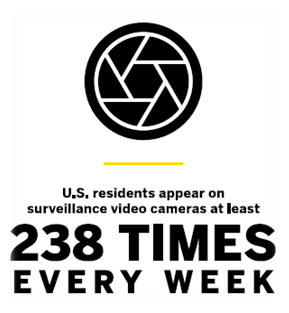
Forensic Video Analysis is defined as the scientific examination, comparison, and/or the evaluation of video in legal matters (LEVA). Most people believe that video is the ‘silent witness’ and that ‘what you see is what you get.’ However, a proper forensic video analysis will show that this is not always the case. In fact, often the videos examined and analyzed are not the original videos with the original meta-data, but copies of the original file from the DVR/NVR system.
In the field of forensic video analysis, the importance of preserving the original video along with its associated metadata cannot be overstated. Original footage provides the most accurate representation of events and includes critical metadata such as timestamps, camera identifiers, and system settings. This information can be vital in legal or investigative contexts.
Although there are thousands of DVR (Digital Video Recorders) manufacturers and a wide variety of storage systems, most of these devices share a common design. Cameras are typically connected to the DVR system via wired or wireless connections. The visual data captured by these cameras is first converted into a digital signal, then compressed using proprietary or standard video codecs to reduce file size.
Before compression, the image data is typically converted into binary and may be encoded into a hexadecimal (hex) format for efficient storage and transmission. During playback, this encoded data is decoded which transforms the compressed hex data back into viewable images. This process allows for real-time or recorded videos to be viewed on monitors or exported for analysis.
Maintaining the integrity of the original video and its metadata throughout this process is crucial for ensuring the admissibility and reliability of the evidence in forensic contexts.
What type of Digital Media Evidence (DME) is available today, and how do we work with them?
As investigators, we frequently encounter a wide range of Digital Multimedia Evidence (DME) file types. With the vast diversity of video formats generated by different recording devices and surveillance systems, managing and analyzing this evidence can be both complex and time-consuming.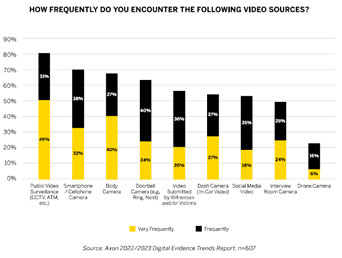
To streamline this process, tools like Axon Investigate play a critical role. Axon Investigate is a dynamic video workflow engine designed to automatically play back and process hundreds of proprietary and standard video file types. It significantly accelerates the review, analysis, and extraction of relevant data from multimedia evidence, helping investigators focus on what matters most.
Today, video is the most prolific source of digital evidence, contributing to approximately 85% of investigative cases. The ability to effectively interrogate various DME formats, while preserving data integrity and extracting actionable insights, is essential for modern investigative workflows.
We use state-of-the-art tools to enhance and clarify footage.
Read More
Obtaining accurate measurements using historical images or footage.
Read More
The timing between individual frames of footage to provide essential data regarding speed, sequence of events and specific actions.
Read More
A specialized process within forensic video analysis used to estimate the stature of an individual captured in surveillance footage.
Read More